Senior Care 101: How to Examine Memory Care Facilities
Business Name: BeeHive Homes of Plainview
Address: 1435 Lometa Dr, Plainview, TX 79072
Phone: (806) 452-5883
BeeHive Homes of Plainview
Beehive Homes of Plainview assisted living care is ideal for those who value their independence but require help with some of the activities of daily living. Residents enjoy 24-hour support, private bedrooms with baths, medication monitoring, home-cooked meals, housekeeping and laundry services, social activities and outings, and daily physical and mental exercise opportunities. Beehive Homes memory care services accommodates the growing number of seniors affected by memory loss and dementia. Beehive Homes offers respite (short-term) care for your loved one should the need arise. Whether help is needed after a surgery or illness, for vacation coverage, or just a break from the routine, respite care provides you peace of mind for any length of stay.
1435 Lometa Dr, Plainview, TX 79072
Business Hours
Picking a memory care community is not just a housing choice, it shapes the last chapters of someone's life. Families come to this crossroad for many reasons. A parent has actually begun wandering during the night. A partner with dementia can no longer be securely raised after a fall. The main caretaker is exhausted after months of interrupted sleep. Excellent memory care relieves these stress. It balances safety with autonomy, and clinical oversight with everyday pleasure. The difficult part is telling the difference in between polished marketing and a place that will really fulfill your loved one's needs.
This guide draws on years of work with families, nurses, and administrators inside senior care. It concentrates on what to search for, what to ask, and how to judge compromises that seldom appear on glossy brochures.
What memory care is, and what it is not
Memory care is a customized type of senior care developed for people living with Alzheimer's disease and other dementias. It is normally housed within an assisted living community or a freestanding building. Compared to standard assisted living, memory care offers secured environments, more staff training in dementia care, structured day-to-day routines, and tailored activities that decrease stress and anxiety and confusion.
It is not a health center, even if there is a nurse on site. Memory care bridges 2 requirements that typically pull in opposite instructions: safety and normalcy. The best neighborhoods keep people safe without making them feel put behind bars. They support choice making without setting citizens approximately fail.
If you are not sure whether it is time, think about threat. Repeated wandering outside, range fires, regular falls, weight loss from missed out on meals, incontinence that overwhelms home resources, and aggressive habits that put somebody at threat, all point toward the need for specialized dementia care. Respite care, which is a short stay in a memory care setting, can assist you check the fit and capture your breath without devoting to a long lease. Numerous households utilize respite care after a hospitalization or during a caretaker's medical leave to see how their loved one reacts to the structure and staff.
The care model under the hood
Every tour will mention person-centered care. What matters is the equipment behind the phrase. The heart of the design is staffing, medical oversight, and how the group responds to habits and health changes.
Staffing ratios. There is no single national requirement for memory care staffing, because guidelines vary by state. Practically, search for daytime caregiver ratios in the series of 1 to 5 or 1 to 8, depending on skill, and higher ratios during the night, often 1 to 10 or 1 to 15. Ratios alone do not tell the full story. Ask how staff are deployed. A ratio of 1 to 6 on paper can feel hazardous if half the team is on break or drifting to another unit. Excellent operators schedule foreseeable breaks and float coverage so homeowners are not left waiting throughout meals and bathing.
Training. Dementia care is not instinctive. Quality neighborhoods supply a minimum of 8 to 16 hours of specialized onboarding on dementia communication, redirection strategies, and understanding of different dementias like Lewy body and frontotemporal illness. Continuous in-services, generally monthly, keep abilities fresh. Training must include nonpharmacologic approaches to agitation, safe transfers, infection recognition, and how to engage individuals with aphasia. Ask to see a sample training calendar, not simply a brochure.
Clinical oversight. Memory care is generally overseen by a nurse, often a registered nurse who leads care planning and supervises medication service technicians. Some structures likewise host going to medical care service providers, psychiatric nurse practitioners, physical and occupational therapists, and hospice groups. The very best setups consist of weekly or biweekly rounding by a physician who can change medications and catch infections or dehydration early. A nurse who understands the citizens will see when a quiet person becomes quieter, or when a chatty person's words lose focus, and will connect those changes to possible medical issues.
Medication management. Behavior in dementia is frequently a type of communication. Medications that sedate can quiet the behavior however likewise strip away movement and cognition. Skilled groups utilize antipsychotics and benzodiazepines with care and track side effects weekly throughout the first month. They work with prescribers to taper, and they trial ecological fixes initially. Door camouflage, soothing music before sundown, discomfort control, bowel regimens, and walking programs can minimize the very behaviors that set off medication use.
The environment informs the truth about priorities
Design can either soothe or puzzle. Stroll the corridors slowly and view how locals move.
Layout and wayfinding. Memory care units with loops enable residents to walk without dead ends that can trigger disappointment. Short sightlines to dining rooms and activity spaces help individuals take part. Try to find clear, large-print signs, contrasting colors on restroom limits and toilet seats, and shadow boxes or memory display screens by doors that hint room ownership. Customized entryways reveal the team worths identity, not simply room numbers.
Lighting and noise. Bright, natural light reduces sundowning and enhances sleep. Ask whether the neighborhood utilizes circadian lighting or a minimum of avoids severe fluorescent glare. Sound matters. Television volume in common spaces that overwhelms conversation is a warning. The areas should hum, not roar.
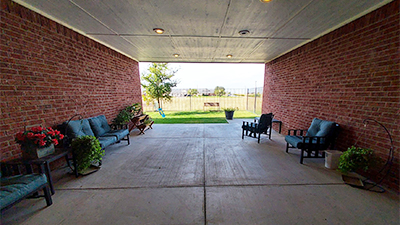
Safety functions. Secure courtyards provide safe access to fresh air. Fencing should mix in, not feel punitive. Doors might be alarmed or utilize code pads. Roam management systems, like discreet bracelets, permit freedom within set zones. Fire security, smoke barriers, and sprinklers ought to be obvious and code compliant. Floors need to be matte, not glossy, given that glare can look like water or holes to people with dementia-related visual changes.
Privacy and dignity. Take a look at bathrooms. Are they clean, bright, and stocked with incontinence supplies in a manner that does not advertise a resident's difficulties to every passerby. Exist lift systems or ceiling tracks in rooms where locals need two-person transfers. If not, how do personnel protect backs and hips, both theirs and homeowners'.
Life between breakfast and bedtime
Programs that look lively at 11 a.m. And dead by 3 p.m. Frequently rely excessive on a single activities director. Reality needs rhythm. People with dementia do finest with predictable regimens, small group engagement, and significant tasks.
Activities. Excellent calendars are not the goal. Participation is. Search for blended activities across the day: baking, garden strolls, chair yoga, singalongs, and one-on-one visits for those who avoid groups. Cognitive stimulation can be as basic as arranging nuts and bolts for a retired mechanic or folding towels for a previous homemaker who found pride in a neat linen closet. Ask how the team engages individuals who refuse activities or nap throughout the day. memory care near me A competent assistant will invite, not force, and will adapt the task so the individual feels successful.
Meals. Food brings convenience. Inspect whether meals are served family design or plated. Finger foods help those who deal with utensils. High caloric density matters for individuals who speed. View a meal if you can. Do staff sit and cue, or do they hover at a range. Are adaptive cups and plates available. Hydration stations with fruit-infused water or tea work, however just if personnel timely sips throughout the day.
Bathing and individual care. Bathing can activate stress and anxiety. The most effective method is versatile scheduling and a calm rate. Look for non-slip seating, hand-held shower heads, and warmed towels. Ask how the group interprets refusal. Is it a tough no, or does someone try once again later on with a different assistant who has much better connection. The response exposes whether self-respect is practiced or simply preached.
Sleep. Nights can be uneasy for people with dementia. Some neighborhoods run relaxing late-evening programs, like peaceful music, hand massages, and dimmed lights. Others shut off the lights and hope for the very best. If your loved one wanders in the evening, ask how they are supervised between midnight and 5 a.m., when staffing is thinnest.
Culture shows up in small moments
You can pick up culture in how staff greet each other and homeowners. Do aides know the names of family members. Do they laugh with homeowners without mocking them. Are supervisors noticeable beyond tours and meetings.
Leadership stability matters. High administrator or nurse turnover generally ripples through the structure. A group that has interacted for several years anticipates problems before they swell. Ask how long the executive director, nurse leader, and department heads have been in place. Short tenures are not automatically bad if the operator is investing in a turnaround, however you need to probe what altered and what is improving.
Communication standards matter too. Memory care is a three-way relationship in between the resident, the group, and the family. Neighborhoods that schedule quarterly care plan conferences, return calls the exact same day, and share little wins develop trust. One community I dealt with sent a weekly image and two-sentence update to families. It was simple, yet it reduced stress and anxiety and hospitalizations since relative stayed engaged.
Health integration, hospice, and healthcare facility use
Dementia care does not take place in a bubble. Homeowners still get urinary tract infections, pneumonia, heart failure, and fractures. Search for a care model that can respond inside the building whenever practical. Point-of-care lab draws, telehealth with the medical care group, and relationships with mobile x-ray services can minimize disruptive ER trips.
Hospice and palliative care are not failures. They are tools. An excellent memory care neighborhood partners with hospice firms and understands when to refer. If your loved one is dropping weight, withdrawing from activities, or experiencing regular infections, palliative conversations can line up care with convenience. Ask where end-of-life care typically occurs. Many people choose to die in location, with familiar staff and family close by. That takes training, coordination, and a clear prepare for symptom management.
Falls happen. What matters is how the community learns from them. Event reviews need to be routine. Was the flooring wet. Were shoes appropriate. Did a brand-new medication cause lightheadedness. Neighborhoods that track patterns can decrease repeat falls without resorting to unnecessary restraint, that includes chemical restraint.
Cost, contracts, and what the small print hides
Memory care is expensive. In lots of areas, regular monthly base rates range from 5,000 to 10,000 dollars, in some cases greater in significant city areas. Prices models differ:
- Some communities utilize all-encompassing rates, where the base rate covers room, board, and many care.
- Others utilize tiered care levels, including fees as support requires boost, for example an additional 800 dollars for assist with two-person transfers or incontinence care.
- Medication management can be consisted of or billed per medication pass.
- Respite care is typically billed per day or week at a somewhat higher rate however without a long-lasting commitment.
Ask about annual rate boosts. Typical ranges are 3 to 7 percent per year, however inflationary spikes can push greater. Clarify what activates a transfer to a higher care tier. If your loved one develops behaviors that need additional staffing, the monthly bill might climb up quickly. Contracts ought to define notification periods for leaving, refund policies, and what takes place throughout hospitalizations. Some neighborhoods hold the space at complete or partial rate during a health center stay, others allow temporary holds at a lowered fee.
Insurance rarely pays for room and board. Long-term care insurance may compensate part of the cost if the policy consists of memory care. Medicaid coverage for memory care differs by state and is typically connected to assisted living waivers. Veterans and making it through partners may qualify for Help and Presence advantages. Trusted administrators help households navigate these programs without overpromising.
How to check out quality data without getting misled
Unlike nursing homes, numerous memory care units sit inside assisted living and are not ranked by a federal First-class system. Quality oversight depends on state licensing. You can request state survey reports, which note deficiencies and corrective actions. A shortage is not constantly a deal-breaker. Repeated patterns matter more than a one-time citation for a documentation lapse. Ombudsman offices can share problem patterns and assist households deal with concerns.
Online reviews capture extremes. Look past star ratings and read for specifics. Constant styles, like poor communication or frequent personnel turnover, should have weight. Beware about confidential tirades that do not line up with what you see throughout a visit.
Touring method that saves time and exposes truth
Tours set up mid-morning on a weekday are typically the community's finest foot forward. You must see that variation, however also its opposite. Visit again during supper or on a weekend. Listen for how staff respond to buzzers, who sits with homeowners throughout meals, and whether supervisors are present or reachable.
Consider utilizing respite look after a week or two if the community provides it. A brief stay reveals how your loved one reacts to the environment. You will discover more from three bath attempts, two meals, and a Sunday afternoon than from any brochure.
Here is a concise tour-day list to keep you focused:
- Arrive unannounced for a second visit at a various time of day and view a meal.
- Ask 3 direct-care aides how long they have worked there and what training they get.
- Request to see the activity in a small group room, not just the centerpiece in the lobby.
- Review the last state survey and ask what altered in response.
- Walk the courtyard and check whether exits are safe but still feel humane.
Red flags you ought to not ignore
- Strong urine or fecal odors that stick around beyond a specific occurrence, which typically indicates persistent understaffing or bad infection control.
- Residents parked in wheelchairs along corridors with no engagement for long stretches.
- Staff who speak about citizens in front of them as if they are not there.
- Confused medication practices, like unsecured med carts or hurried passes with regular errors.
- Leadership that can not articulate staffing ratios, training hours, or how they handle escalating behaviors.
Family involvement and the rhythm of care planning
Families know histories that do not always fit into medical charts. The biography of a previous instructor who relaxes when provided reading product, or the Army veteran who reacts to structure and clear directions, can alter everyday outcomes. Bring that understanding. Lots of communities use a life story type. Surpass favorite foods. List topics that activate stress and anxiety, spiritual preferences, music that soothes, and past regimens. If mornings were constantly sluggish, pushing a 7 a.m. Shower may backfire.
Expect a care plan within one month of move-in, then a minimum of quarterly or after any considerable change. These conferences should move from problems to useful actions. If weight is down 5 pounds, who will hint 2nd helpings. If aggression happens during bathing, what time of day and which employee yields much better outcomes. After the meeting, validate the strategy in composing so move changes and brand-new hires do not erase progress.
Communication ought to be two-way. Communities that share small victories build trust, and households that share upcoming medical appointments or travel plans assist the team plan staffing and engagement.
Moving day, regret, and what a soft landing looks like
The hardest part is sometimes emotional, not logistical. Families typically carry regret, even when home care is risky. It helps to frame the relocation as an extension of care, not a surrender of it.
Preparation smooths the landing. Bring familiar products that hint identity, like a favorite chair, quilt, or wall images positioned at eye level. Prevent mess that confuses navigation. Label clothes clearly. If your loved one always kept a watch on the left-nightstand, place it there. Routines matter on day one. If coffee at 9 a.m. Was sacred, tell the team.
Expect a wobble. Numerous residents are more confused or upset for the very first one to two weeks. Excellent teams increase one-on-one time during this window, schedule assuring check-ins, and decrease huge group needs. You can assist by checking out at times that line up with calm periods, not throughout bathing or shift modification. If the individual asks to go home, avoid arguing truths. Confirm the sensation and reroute to something tangible, like a walk in the courtyard or an image album.
Respite care as a bridge and a barometer
Short stays serve multiple functions. They provide caregivers time to recover, and they provide information. If your loved one requires more prompting than the structure can provide even throughout respite, it may signal that the environment or staffing level is not sufficient. Conversely, if sleep enhances and wandering eases, the structured regimen may be working. Use respite care to observe details, like how the team handles incontinence and whether skin remains intact. Ask for a quick discharge summary after respite, noting what worked and what did not. You can carry those lessons back home or into a longer placement.
Special circumstances that need sharper questions
Younger-onset dementia typically comes with physical vitality and behavioral symptoms that exceed common memory care programs. Inquire about protected outside area for paced walking, staff training in de-escalation, and access to neuropsychiatry support. You might require a neighborhood that accepts greater skill, with more robust staffing and a strong scientific partner.

Couples face a difficult calculus. Some communities let a spouse reside on site in assisted living while the partner lives in memory care, easing visits and meals together. It can work if both spaces coordinate schedules. If the healthy partner tries to end up being the primary caregiver inside the structure, burnout follows. Clarify limits and support.
Cultural positioning matters. Language gain access to, faith practices, and food customs are not extras. A resident who can consult with an assistant in their first language will accept care more easily. Inquire about bilingual personnel, chaplain assistance, and menu versatility. Tour on a day when cultural programming is running if it is necessary to your family.
A brief story from the trenches
A daughter I worked with, Elena, explored four neighborhoods for her father, Luis, who had mid-stage Alzheimer's. Two looked beautiful. One had a rooftop garden. Elena chose the least flashy structure. Her factors were easy. The nurse had actually existed nine years and greeted three locals by name, then asked one how his grandson's baseball game went. A caretaker revealed Elena how they utilized an easy apron with Velcro closures to protect self-respect throughout mealtime. The courtyard had a loop path with a bench every twenty feet. The administrator did not flinch when Elena requested state study results and strolled her through a current medication mistake and the re-training that followed.
Luis moved in on respite look after 2 weeks. He slept through the night by day four because personnel rerouted his 9 p.m. Pacing with a brief walk and cocoa, then an image album of his woodworking tasks. Elena encompassed a permanent stay. A year later, when Luis needed hospice, the same team handled his pain and kept his favorite Spanish guitar music playing gently in the room. Elena said the place never ever felt like a hotel, and that was the point. It felt like people who knew her father.
Bringing everything together
Quality memory care exposes itself through consistent staffing, thoughtful style, and everyday practices that safeguard self-respect. Marketing can not phony the way a caregiver crouches to eye level to speak to a resident, or how quickly someone responds to a call light. If you construct your examination around staffing, environment, daily life, and health combination, and you test your impressions with a 2nd visit or a respite stay, you will see the distinction in between pledges and practice.
There is no ideal option. Compromises are unavoidable. A smaller sized structure might use intimacy however fewer on-site therapies. A larger campus might offer facilities however feel overstimulating. Your task is to match the place to the individual in front of you, not the person they were 10 years earlier. Ask plain questions. Look previous chandeliers to bathroom grab bars and meal hints. Trust what you observe more than what you are told.
Most families do not be sorry for moving too early. They regret moving too late, after injury or caregiver collapse. If you reach the point where safety, sleep, and health are crumbling, a well-chosen memory care community can bring back balance for everyone included. Respite care can be your stepping stone. And when the time pertains to lean on hospice, a strong group will assist you keep the focus where it belongs, on comfort, connection, and the individual you love.
BeeHive Homes of Plainview provides assisted living care
BeeHive Homes of Plainview provides memory care services
BeeHive Homes of Plainview provides respite care services
BeeHive Homes of Plainview supports assistance with bathing and grooming
BeeHive Homes of Plainview offers private bedrooms with private bathrooms
BeeHive Homes of Plainview provides medication monitoring and documentation
BeeHive Homes of Plainview serves dietitian-approved meals
BeeHive Homes of Plainview provides housekeeping services
BeeHive Homes of Plainview provides laundry services
BeeHive Homes of Plainview offers community dining and social engagement activities
BeeHive Homes of Plainview features life enrichment activities
BeeHive Homes of Plainview supports personal care assistance during meals and daily routines
BeeHive Homes of Plainview promotes frequent physical and mental exercise opportunities
BeeHive Homes of Plainview provides a home-like residential environment
BeeHive Homes of Plainview creates customized care plans as residents’ needs change
BeeHive Homes of Plainview assesses individual resident care needs
BeeHive Homes of Plainview accepts private pay and long-term care insurance
BeeHive Homes of Plainview assists qualified veterans with Aid and Attendance benefits
BeeHive Homes of Plainview encourages meaningful resident-to-staff relationships
BeeHive Homes of Plainview delivers compassionate, attentive senior care focused on dignity and comfort
BeeHive Homes of Plainview has a phone number of (806) 452-5883
BeeHive Homes of Plainview has an address of 1435 Lometa Dr, Plainview, TX 79072
BeeHive Homes of Plainview has a website https://beehivehomes.com/locations/plainview/
BeeHive Homes of Plainview has Google Maps listing https://maps.app.goo.gl/UibVhBNmSuAjkgst5
BeeHive Homes of Plainview has Facebook page https://www.facebook.com/BeeHivePV
BeeHive Homes of Plainview has an YouTube page https://www.youtube.com/@WelcomeHomeBeeHiveHomes
BeeHive Homes of Plainview won Top Assisted Living Homes 2025
BeeHive Homes of Plainview earned Best Customer Service Award 2024
BeeHive Homes of Plainview placed 1st for Senior Living Communities 2025
People Also Ask about BeeHive Homes of Plainview
What is BeeHive Homes of Plainview Living monthly room rate?
The rate depends on the level of care that is needed. We do an initial evaluation for each potential resident to determine the level of care needed. The monthly rate is based on this evaluation. There are no hidden costs or fees
Can residents stay in BeeHive Homes until the end of their life?
Usually yes. There are exceptions, such as when there are safety issues with the resident, or they need 24 hour skilled nursing services
Do we have a nurse on staff?
No, but each BeeHive Home has a consulting Nurse available 24 – 7. if nursing services are needed, a doctor can order home health to come into the home
What are BeeHive Homes’ visiting hours?
Visiting hours are adjusted to accommodate the families and the resident’s needs… just not too early or too late
Do we have couple’s rooms available?
Yes, each home has rooms designed to accommodate couples. Please ask about the availability of these rooms
Where is BeeHive Homes of Plainview located?
BeeHive Homes of Plainview is conveniently located at 1435 Lometa Dr, Plainview, TX 79072. You can easily find directions on Google Maps or call at (806) 452-5883 Monday through Sunday 9:00am to 5:00pm
How can I contact BeeHive Homes of Plainview?
You can contact BeeHive Homes of Plainview by phone at: (806) 452-5883, visit their website at https://beehivehomes.com/locations/plainview/, or connect on social media via Facebook or YouTube
Residents may take a trip to the The Museum of the Llano Estacado . The Museum of the Llano Estacado offers regional history exhibits that create an engaging yet manageable outing for assisted living, memory care, senior care, elderly care, and respite care residents.